Rittal Telecom Infrastructure Solutions

Purpose-built enclosure ecosystems for every segment of the telecom value chain — from carrier central offices to edge micro data centers.

Carrier Network Infrastructure solution

Carrier Network Infrastructure

NEBS Level 3 compliant cabinet systems engineered for central offices, regional switching centers, and last-mile distribution nodes.

  • NEBS Level 3 & GR-63-CORE seismic rated
  • 42U to 47U cabinets with 800kg+ load capacity
  • Integrated PDU with intelligent power monitoring
  • Hot/cold aisle containment compatible
Request Spec Sheet
Data Center solution

Hyperscale & Enterprise Data Centers

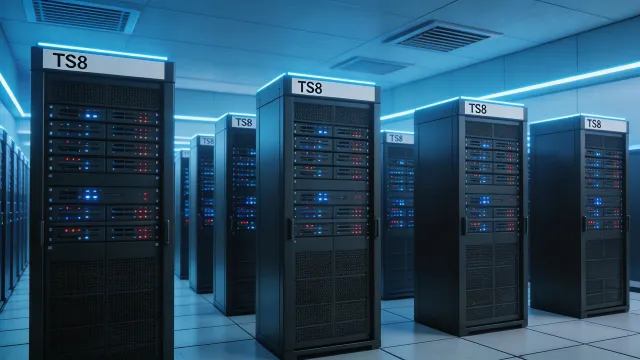
High-density rack infrastructure supporting up to 30kW per cabinet with advanced thermal management for AI/ML and HPC workloads.

  • 30kW per rack liquid cooling support
  • Modular busbar power distribution
  • DCIM integration via open REST API
  • Scalable from 10 to 10,000+ racks
Request Spec Sheet
Edge Computing solution

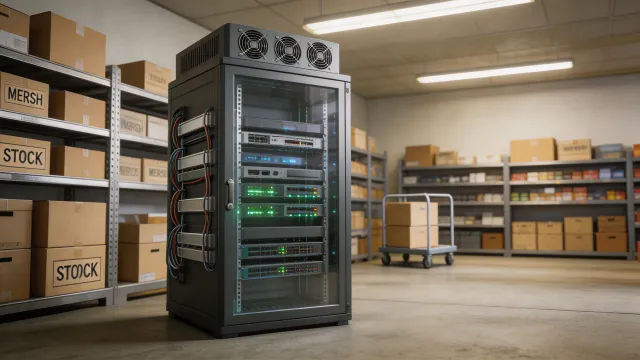
Edge Computing & Micro Data Centers

Self-contained, pre-configured micro data center enclosures deployable in 48 hours — from factory floor to retail back office.

  • All-in-one: rack + cooling + UPS + monitoring
  • IP55 rated for non-IT environments
  • Noise level <35 dB(A) for occupied spaces
  • Remote monitoring via cloud dashboard
Request Spec Sheet
5G Infrastructure solution

5G & Outdoor Network Infrastructure

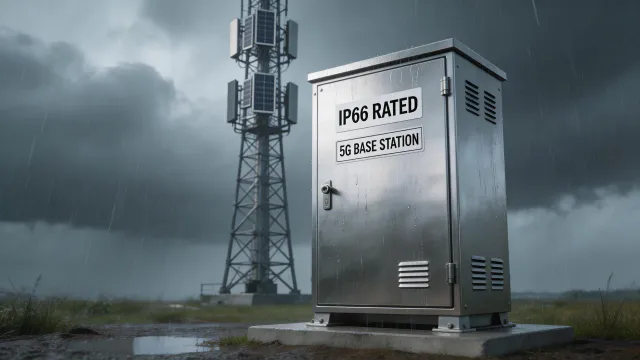
IP66-rated outdoor enclosures designed for 5G macro/small cell deployments, fiber distribution nodes, and roadside telecom shelters.

  • IP66 / NEMA 4X environmental protection
  • -40°C to +55°C operating temperature range
  • Vandal-resistant construction with 3-point locking
  • Integrated heat exchanger or direct free cooling
Request Spec Sheet

Applicability & Technical Boundaries

Transparent specifications help you determine the right fit. Every enclosure platform has defined operating boundaries.

Temperature Range

Standard outdoor enclosures are rated for −40°C to +55°C ambient temperature. Deployments in extreme desert environments above +55°C or polar regions below −50°C require custom thermal engineering and extended-range cooling units, which increase lead time to 6–8 weeks.

Seismic Rating Scope

Seismic Zone 4 (GR-63-CORE) certification applies to the TS 8 and VX25 cabinet platforms. Smaller wall-mount and compact enclosures are tested to Zone 2 only. Projects in high-seismic regions (Japan, California, Taiwan) requiring Zone 4 compliance must specify rack-mount configurations during the design phase.

Cooling Capacity Ceiling

Air-based climate control (Blue e+) supports up to 6kW per enclosure. Deployments exceeding 6kW—common in high-density compute and AI inference racks—require liquid cooling integration, which adds plumbing infrastructure and is not available as a retrofit to existing air-cooled installations.

Corrosion Resistance

Standard powder-coated steel enclosures are rated for C3 corrosion category (moderate urban/industrial atmospheres). Coastal, offshore, or chemical plant deployments (C4/C5 category) require stainless steel 316L or aluminum construction at a 40–60% cost premium, with 4–6 week additional lead time.

Infrastructure Selection Considerations

Choosing the right network architecture involves weighing competing priorities. Here are two trade-offs our engineers help clients navigate daily.

Fiber Optic vs. Copper Cabling for Last-Mile Connectivity

The ongoing debate between deploying fiber-to-the-premises versus leveraging existing copper infrastructure with G.fast and VDSL2 vectoring remains one of the most significant capital allocation decisions for telecom operators.

Full Fiber Deployment

Future-proof bandwidth capacity with symmetric multi-gigabit speeds, lower long-term maintenance costs (no active electronics in the field), and superior latency and reliability for next-generation applications such as cloud gaming, telemedicine, and industrial IoT. Typical fiber deployments achieve 99.99% uptime with passive optical splitters requiring zero field power.

Enhanced Copper / Hybrid Approach

Significantly lower upfront deployment cost by reusing existing last-mile copper pairs, faster time-to-service using G.fast vectoring (up to 1 Gbps over 100m), and sufficient bandwidth for current residential demand. Hybrid fiber-to-the-cabinet (FTTC) architectures with copper last-drop reduce CAPEX by 40-60% compared to full FTTP in existing neighborhoods.

Rittal perspective: Both architectures require robust outdoor enclosures at distribution points. Our IP66 street cabinets house DSLAM equipment for copper-based networks, while our fiber distribution enclosures serve FTTP deployments. The choice depends on the operator’s 10-year bandwidth forecast and existing plant condition.

5G mmWave vs. Sub-6 GHz Deployment Strategy

Carriers face a fundamental infrastructure trade-off between high-capacity millimeter wave deployments and wider-coverage sub-6 GHz bands when rolling out 5G networks.

mmWave Priority

Massive bandwidth with up to 800 MHz channel widths enabling multi-Gbps throughput. Ultra-low latency below 1ms for industrial IoT and autonomous systems. Ideal for dense urban venues, stadiums, and factory floors. However, mmWave signals attenuate rapidly — effective range is typically 200-500 meters with limited building penetration, requiring 5-10x more cell sites per square kilometer.

Sub-6 GHz Priority

Superior propagation characteristics with cell radius up to 2-5 km in urban environments and meaningful building penetration. Lower infrastructure density reduces deployment cost per covered square kilometer by approximately 70%. Mid-band (3.5 GHz) offers a balanced compromise: 100-400 Mbps per user with reasonable density requirements, making it the most widely adopted 5G band globally as of 2025.

Rittal perspective: mmWave densification multiplies the number of street-level enclosure installations by 5-10x compared to sub-6 GHz, directly impacting infrastructure housing demand. Our compact outdoor enclosures (600mm-wide IP66 units) are specifically dimensioned for small cell radio equipment, while our larger shelters serve traditional macro cell deployments.

Need a Tailored Solution?

Our application engineers will design an enclosure system optimized for your specific deployment requirements.

Discuss Your Project