
Telecommunications
Central offices, cell tower base stations, fiber distribution nodes, and last-mile access points. Rittal provides NEBS Level 3 cabinets for indoor carrier facilities and IP66 outdoor enclosures rated for −40°C to +55°C ambient environments. Over 200 telecom operators worldwide use Rittal enclosures in their network infrastructure.

Data Centers
Hyperscale campuses, colocation facilities, and enterprise server rooms. Our VX25 rack platform supports up to 30kW per cabinet with rear-door liquid cooling and hot/cold aisle containment. Integrated DCIM sensors provide real-time power, temperature, and humidity monitoring via open REST API, enabling PUE optimization down to 1.15.
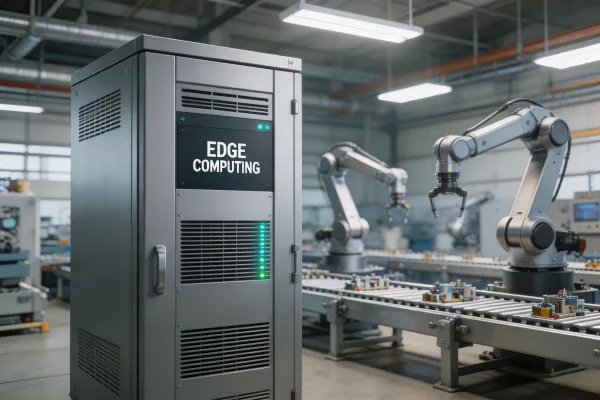
Manufacturing & Industry 4.0
Factory-floor edge computing, MES connectivity, and industrial IoT gateways. Enclosures for manufacturing environments require IP55 ingress protection, resistance to coolant mist and metal dust, and EMC shielding (40–60 dB) to prevent interference from welding robots and variable frequency drives operating nearby.
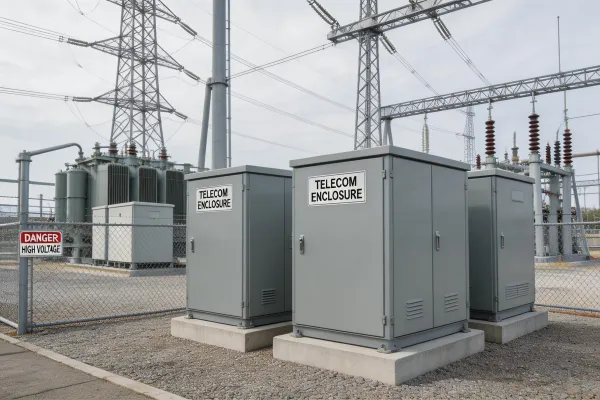
Energy & Utilities
SCADA communication nodes at substations, smart grid distribution automation, and renewable energy monitoring. Utility-grade enclosures must withstand electromagnetic interference from high-voltage switchgear (up to 145kV proximity) and meet IEC 61439 for low-voltage switchgear assemblies. Rittal’s seismic Zone 4 options protect equipment in earthquake-prone utility corridors.

Transportation
Railway signaling cabinets, airport communications infrastructure, and intelligent highway systems. Transportation applications demand EN 50125-compliant enclosures with enhanced vibration resistance, wide operating temperature ranges, and redundant cooling. Trackside cabinets must pass the EN 45545-2 fire safety standard for railway rolling stock proximity.
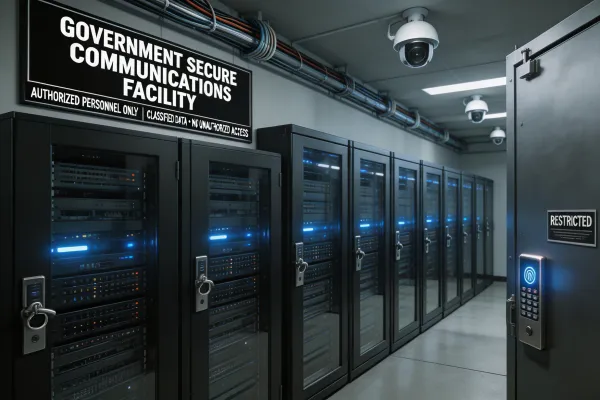
Government & Defense
Secure communications facilities, military C4ISR infrastructure, and classified data processing centers. Defense applications require TEMPEST-grade EMC shielding (NSA/CSS EPL listed options), multi-point locking with tamper detection, and MIL-STD-810G compliance for shock, vibration, and humidity. Rittal offers configurable security packages meeting NATO SDIP-27 Level A requirements.